
The Fire Is Not a Stage
The Fire Is a Circle

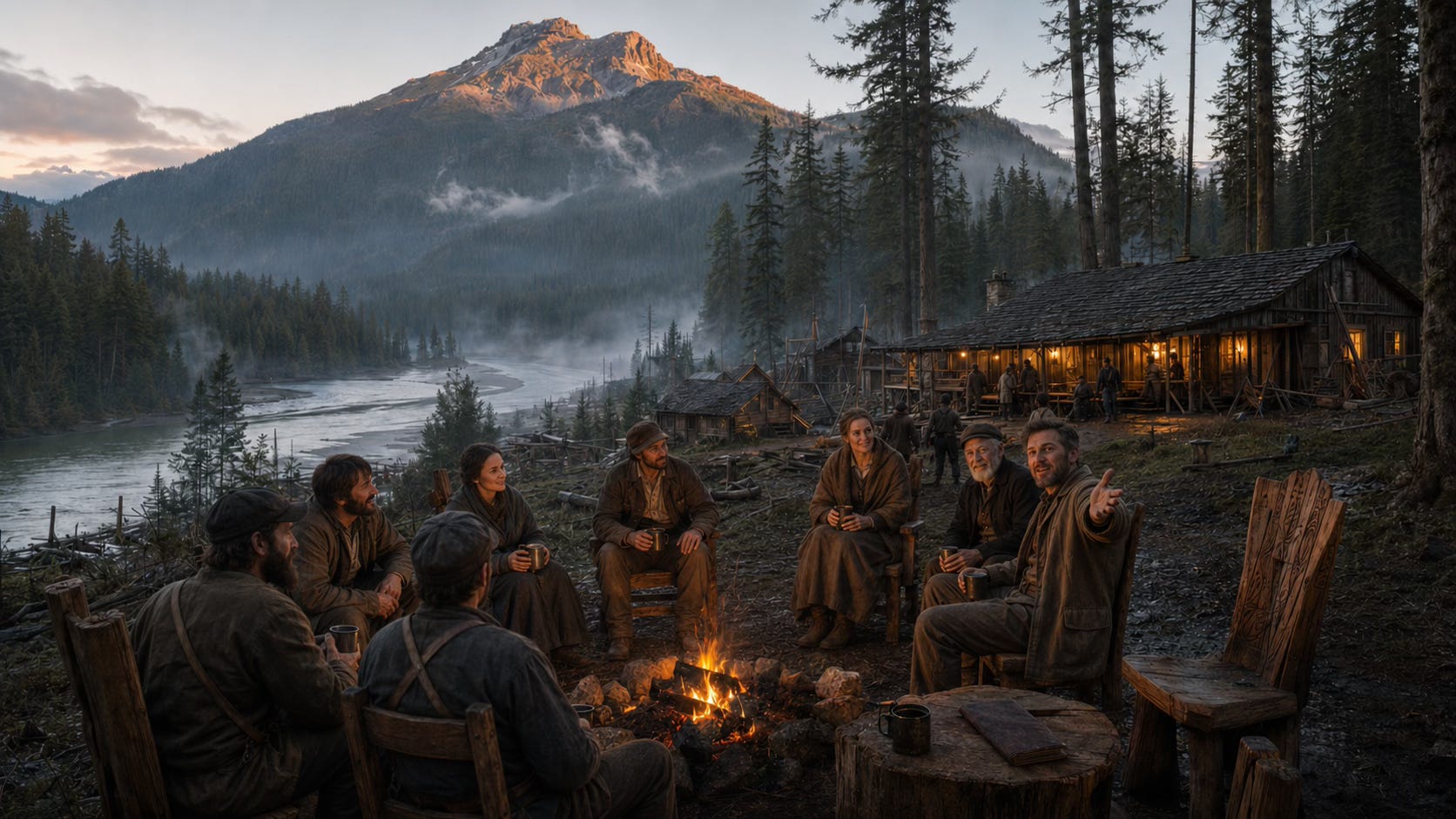
At Timberline, the fire is not a stage.
No one stands above it.
No one owns the center.
No title is large enough to place one person permanently above another.
The fire is a circle.
Across North America, many Indigenous Nations have long gathered in circles, each with distinct traditions, ceremonies, and meanings. Timberline does not claim those traditions as its own. It approaches them with respect and humility, receiving only a broader lesson that has appeared in many human communities:
The shape of a gathering influences the way people listen, participate, and care for one another.
A stage separates the speaker from the audience.
Rows create a front and a back.
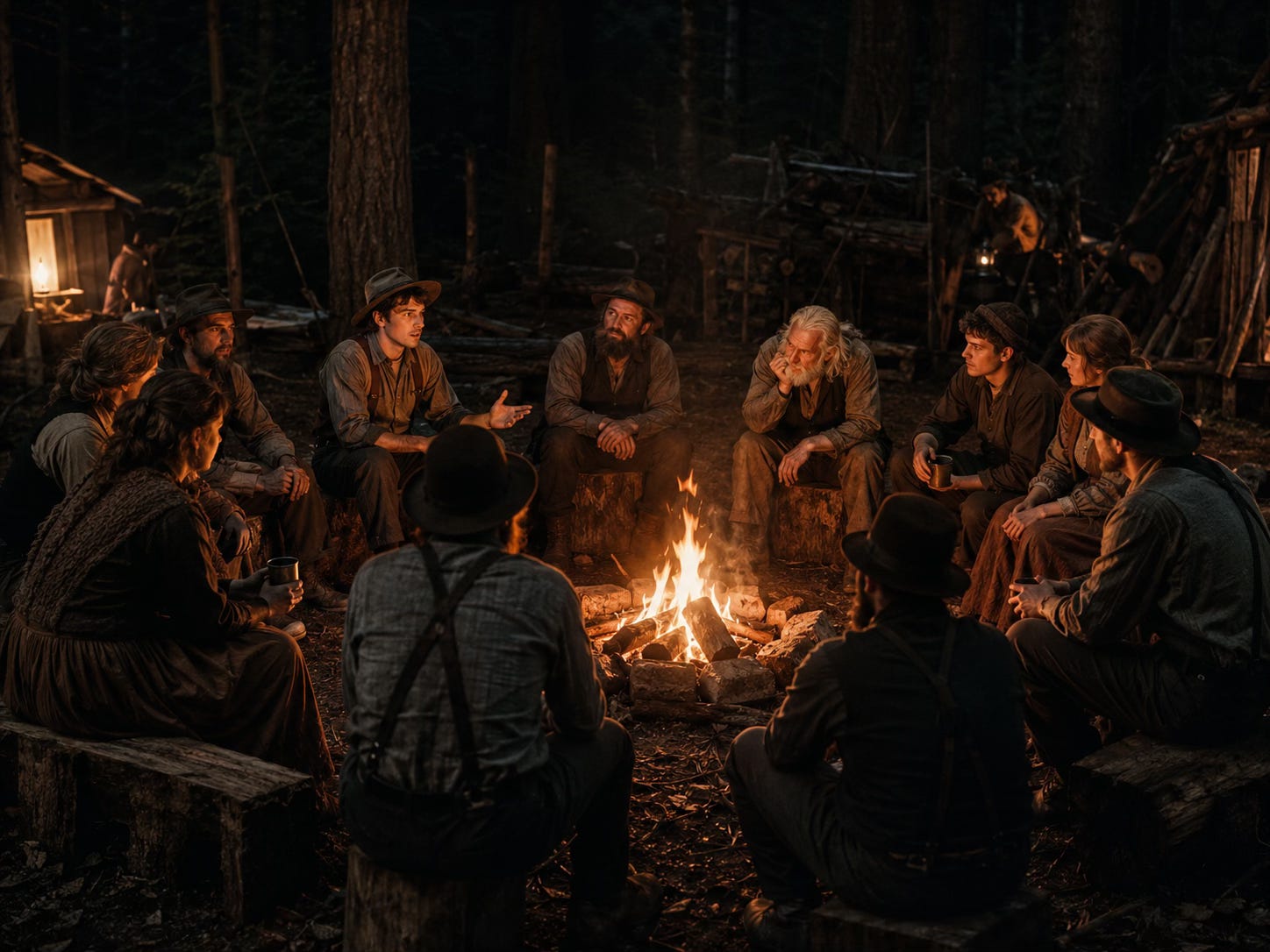
A circle turns people toward one another.
In a circle, everyone can see who is speaking, who has remained quiet, and who may still be wondering whether there is room for them.
Most importantly, the center belongs to no person.
At Timberline, the fire holds that place.
It offers warmth without becoming anyone’s possession.
Each of us may help tend it.
None of us may claim it.
That is how we hope conversation works here.
Experience does not give us ownership of the circle.
It gives us the opportunity to care for it.
The longer we have walked, the more room we should make for those just beginning.
Because no one sees the whole forest alone.
How We Tend the Fire
Every evening, someone adds another log.
Someone pours another cup of coffee.
Someone notices the person still standing at the edge of the circle and quietly makes room.
That is how a fire stays alive.
Communities are not so different.
Bring Something Real
Bring what you have lived.
Bring what you have learned.
Bring what you are still trying to understand.
No one arrives with every answer.
Wisdom is not measured by certainty.
It is revealed by a willingness to keep learning.
Listen Before You Answer
Listening is more than waiting for our turn to speak.
It is choosing to give another person our full attention.
Sometimes the greatest gift we offer another human being is not advice.
It is the experience of being heard.
Leave Room
A fire needs air.
A circle needs space.
Not every silence needs to be filled.
Not every question needs an immediate answer.
Make room for the newcomer.
For the quieter voice.
For the unfinished thought.
Sometimes the person speaking least is carrying the story we most need to hear.
Challenge Ideas. Protect People.
Healthy circles are not built by avoiding disagreement.
They are built by remembering that every idea belongs to a person worthy of dignity.
Truth deserves careful examination.
People deserve careful treatment.
Understanding will always outlast victory.
Hold Stories With Care
Every story shared around the fire is a gift.
Some arrive easily.
Others arrive carrying years of courage.
Never separate a story from the person who lived it.
When someone trusts you with a piece of their life, carry it gently.
Trust is one of the quiet flames that keeps every community warm.
Add Light, Not Only Heat
Some conversations are difficult.
Pain deserves honesty.
Anger deserves acknowledgment.
But heat alone cannot light the trail ahead.
Whenever possible, leave a conversation asking:
What did we understand?
What can we repair?
What can we build together?
Because the purpose of a fire is not merely to burn.
It is to help people see.
Remember We Are Keepers
None of us owns this fire.
Others tended it before us.
Others will gather after we are gone.
Our responsibility is simple:
Leave it warmer than we found it.
An Invitation
Between the Mountain and the River, people have always gathered around fires.
Some came carrying joy.
Others arrived carrying burdens.
Some spoke immediately.
Others listened for a long while before finding their voice.
All of them changed the circle simply by being there.
If you have found your way here...
Welcome.
You do not need a title before you speak.
You do not need perfect answers before you participate.
You do not have to agree with everyone already seated around the fire.
Bring your experience.
Bring your questions.
Bring what you are still learning.
Bring the story only you can tell.
Every new voice helps us see farther into the forest.
Every honest question helps keep the fire alive.
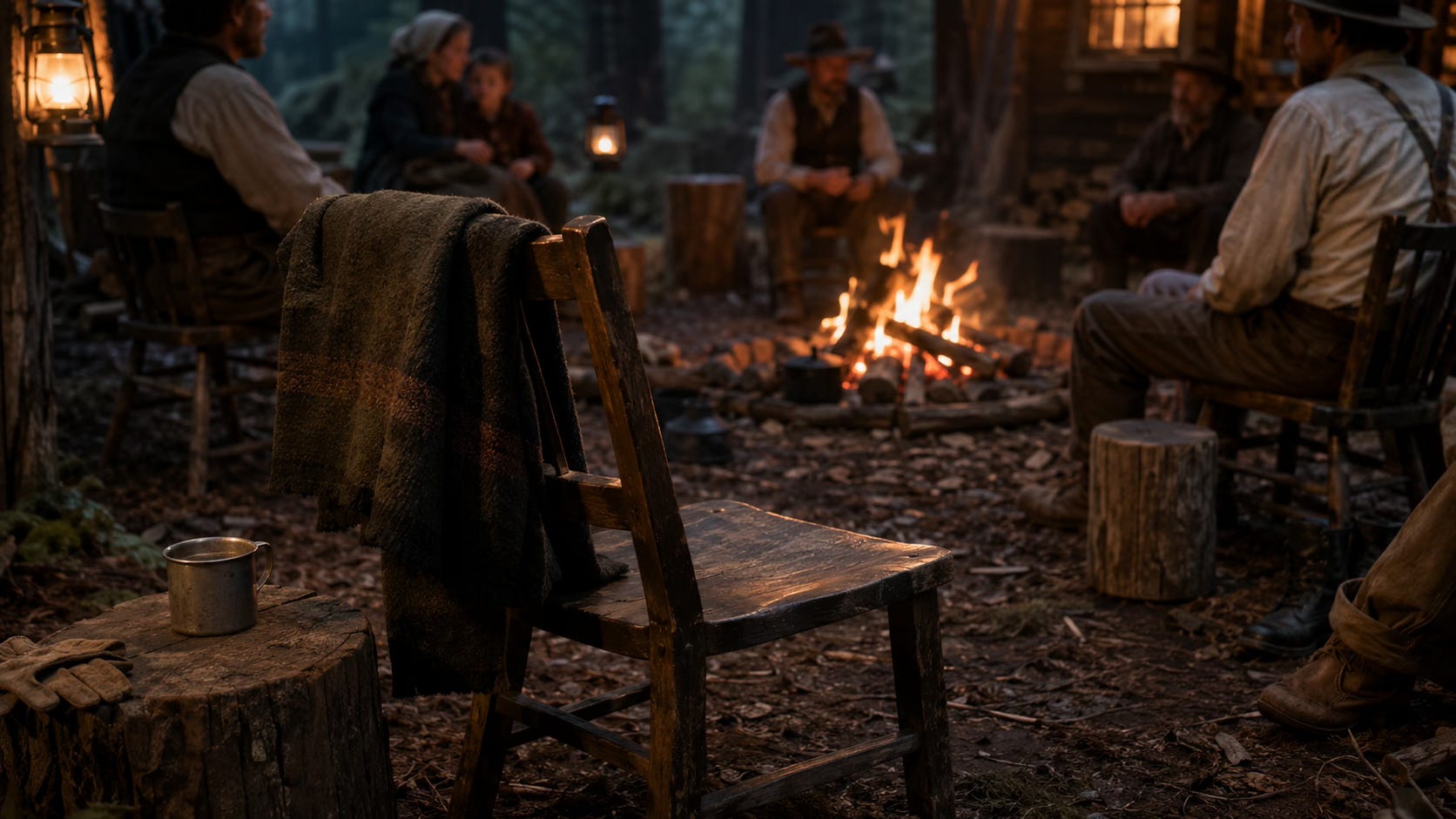
There is always another chair.
Come sit with us.
The fire is already burning.
If you still have questions:
Sources and Further Reading
Smithsonian Human Origins Program. “Hearths & Shelters.” An overview of early hearths and the importance of fire for warmth, cooking, protection, and human gathering.
Polly W. Wiessner. “Embers of Society: Firelight Talk Among the Ju/’hoansi Bushmen.” Proceedings of the National Academy of Sciences, 2014. Research examining the relationship between evening firelight, storytelling, memory, imagination, and social connection.
Smithsonian National Museum of the American Indian. “The Oceti Sakowin Camp Circle.” An exploration of kinship, belonging, and communal responsibility within the traditional camp circle.
Nisqually Indian Tribe. Tribal history, cultural publications, and community materials concerning Nisqually identity, gathering, protocol, and the continuing relationship among people, land, and water.
Rob Davis and colleagues. “Earliest Evidence of Making Fire.” Nature, 2025. Archaeological research concerning deliberate fire-making at Barnham, England, approximately 400,000 years ago.
National Park Service. “A Steam Donkey at 4th of July Creek.” Historical background on steam donkeys, wood-fired boilers, logging crews, cables, signals, and early mechanized logging in the Pacific Northwest.
A Note on Indigenous Traditions
Indigenous Nations across North America possess distinct histories, teachings, ceremonies, and protocols. Timberline does not claim or reproduce those traditions.
This article acknowledges Indigenous examples of gathering with respect and humility, drawing only from the broader lesson that the shape of a gathering can influence how people listen, participate, and accept responsibility for one another.
I love your statement: 'Experience does not grant ownership of the circle. It creates an opportunity to serve it." Opportunity to serve is always good.
I really love this. The whole idea of the fire belonging to everyone, and everyone having a part in tending it, is such a beautiful way to describe community. Not one person needing to have all the answers, not one voice taking over, just people showing up honestly, listening, and making room for each other. We need more circles like this.